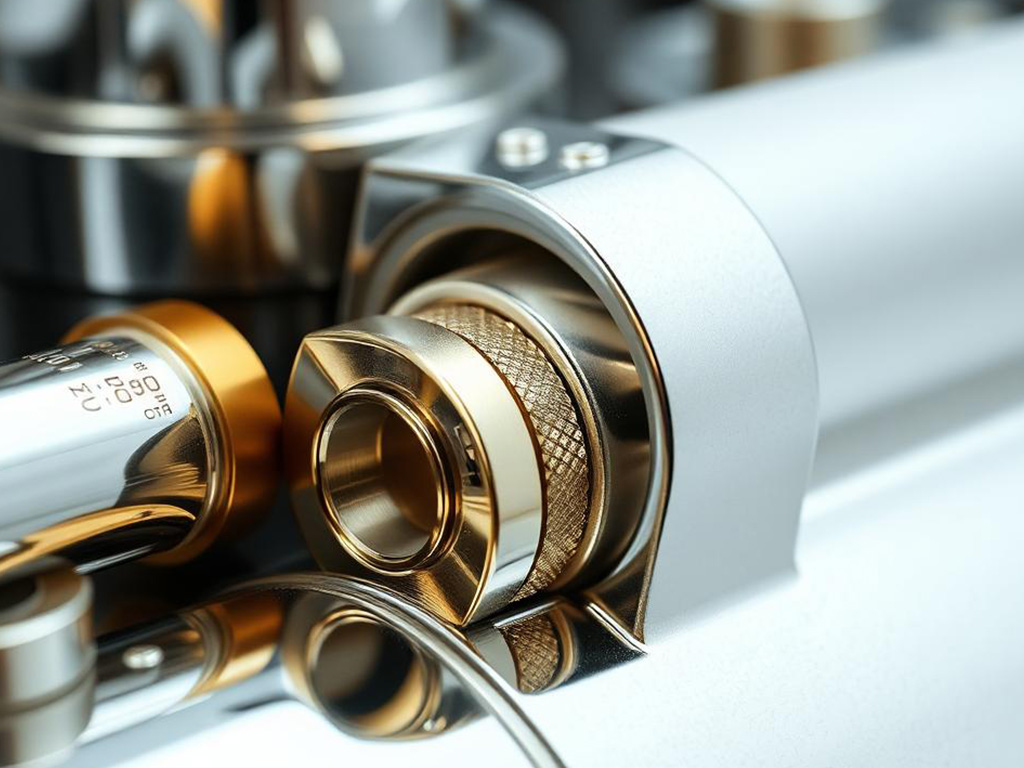
Machining Q&A, Surface Treatment Related

CMF Perspective | Electroplating vs. Electrophoretic Coating

Electroplating

Electroplating

  • Principle: Electrochemical reduction deposits metal ions from an electrolyte onto the part, forming a dense metallic layer.
  • Characteristics: Thin coating (typically a few microns), high gloss; available finishes include chrome-like silver, gold, nickel, etc.
  • Analogy: Like dressing metal in a “shiny suit” — premium appearance but requires periodic care.


Electrophoretic Coating (E-coat)

    • Principle: Charged paint/resin particles are deposited onto the part by electric field, forming a uniform polymer protective film.
    • Characteristics: Even coating thickness (typically 15–35 μm), usually in neutral colors (black, white, gray); fine surface texture and excellent adhesion.
    • Analogy: Like wrapping metal in an “invisible protective film” — understated but highly durable.

Key Comparisons

1.Coating composition

    • Electroplating: metallic deposits.
      • Electroplating: bright, mirror-like metallic finish.
      • E-coat: matte to uniform sheen, subtle and refined.E-coat: crosslinked polymer/resin film.Appearance

2.Appearance

    • Electroplating: bright, mirror-like metallic finish.
    • E-coat: matte to uniform sheen, subtle and refined.
Electrophoretic coating epoxy doming
Electroplating

3.Primary function

    • Electroplating: decorative and functional (conductivity, wear resistance).
    • E-coat: protective (corrosion resistance, full-coverage protection), ideal for complex shapes and internal cavities.

4.Thickness & environmental impact

    • Electroplating: thin layers; requires strict chemical and wastewater control.
    • E-coat: thicker film; lower VOC emissions and generally more environmentally friendly.

Typical Applications

    • Electroplating: fasteners, bathroom hardware, decorative trims, some automotive components where metallic appearance or surface hardness is required.
    • E-coat: automotive primers/bodies, appliance housings, aluminum window/door systems — chosen for corrosion resistance and uniform coverage.

Summary

Electroplating is the “visual enhancer” that delivers metallic sheen and refined surface detail; E-coat is the “protective guardian” that offers consistent, durable corrosion protection. In CMF design, the ideal choice balances aesthetic intent with functional and environmental requirements.