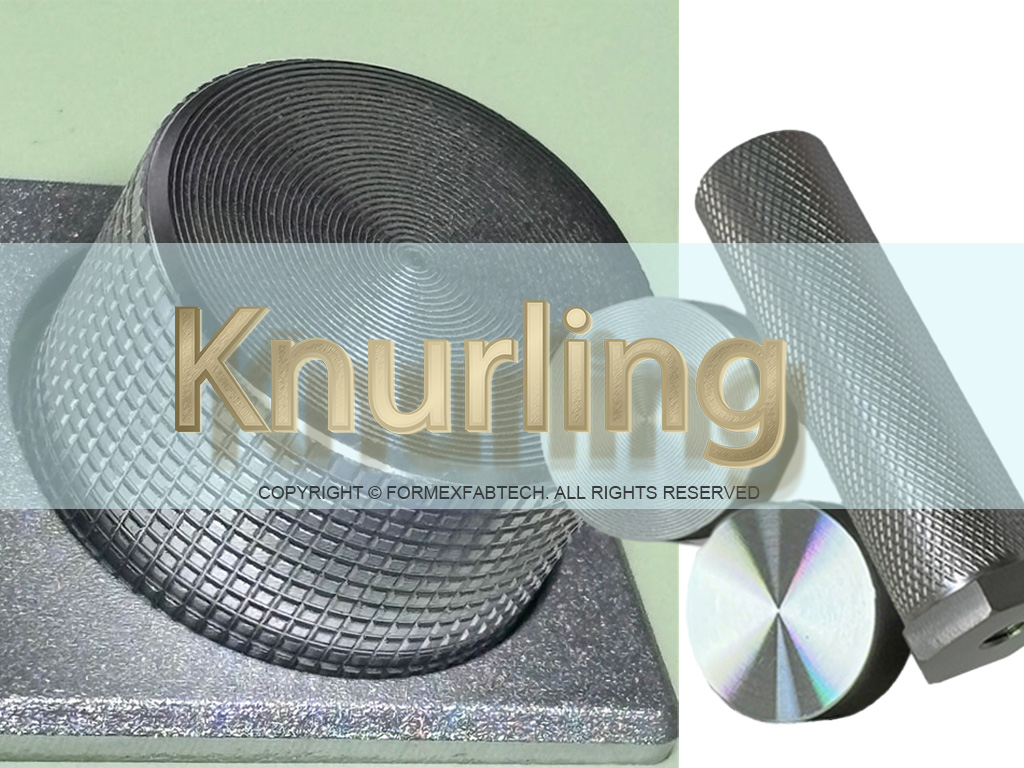
Knurling is a process where a toothed knurling wheel presses against the surface of a metal workpiece, causing plastic deformation of the surface layer to form concave-convex textures. Its patterns mainly include straight knurling, cross knurling, and diagonal knurling: straight knurling is suitable for parts requiring axial sliding (e.g., sleeves), cross knurling offers the best anti-slip effect (commonly used on knobs and handles), and diagonal knurling balances anti-slip performance with aesthetics.
In daily life, knurling is applied to watch crowns, screwdriver handles, and machine tool operation handwheels. It not only ensures a firm grip but also enhances the fit tightness between parts during assembly—for example, the connection between a knurled shaft and hole can transmit torque without additional key structures.