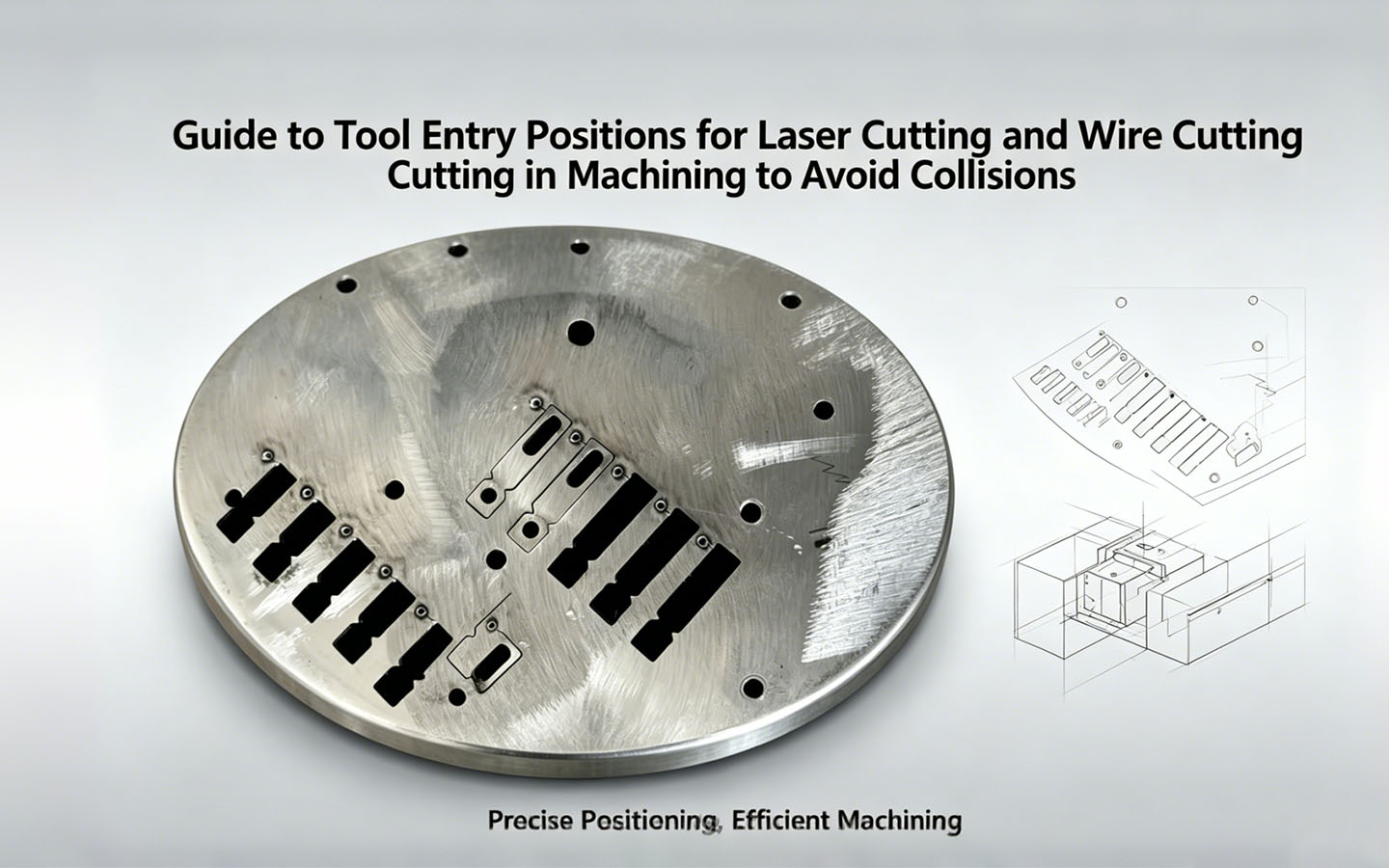
Why We Cut From the Scrap Side (Beyond Just Avoiding Burrs)
Starting laser and wire EDM cuts in the scrap material, rather than directly on the finished part, is a precision manufacturing best practice that solves multiple critical challenges at once.
-
Prevent Part Shift & Machine Collisions
Cutting the scrap area first keeps the workpiece firmly secured to the plate until the very end. This eliminates the risk of parts dropping, shifting, or jamming under the nozzle, which can damage the machine, ruin the part, and cause costly downtime.
-
Control Material Stress & Minimize Deformation
Metal plates contain internal residual stresses. By cutting the scrap material first, we allow these stresses to release gradually in the waste zone. This ensures that when we cut the final part profile, the material is stable, preventing warping, dimensional shrinkage, and out-of-tolerance errors.
-
Eliminate Stress Concentration & Prevent Cracking
The piercing/start point creates a localized zone of thermal or electrical stress. Placing this point in the scrap transfers the stress riser away from the finished part. This prevents micro-cracks, chipping, or premature failure, especially on sharp corners, thin walls, and high-stress components.
-
Guarantee a Flawless, Assembly-Ready Edge
Piercing marks, oxidation discoloration, and initial cut imperfections are all confined to the scrap. The final edge of your part is formed by a continuous, stable cut, resulting in a clean, burr-free surface that requires no secondary deburring or polishing.
-
Protect Critical Dimensions & Fit Surfaces
Even a tiny indentation or burr at the start point can disrupt mating clearances, alignment, or sealing surfaces. By avoiding these marks on the part profile, we ensure every edge meets its dimensional tolerance and functional requirements, so your parts fit perfectly on the first try.