Industry Knowledge, Machining Q&A, Surface Treatment Related

Why Price Varies Between Cut Knurling and Pressure Knurling

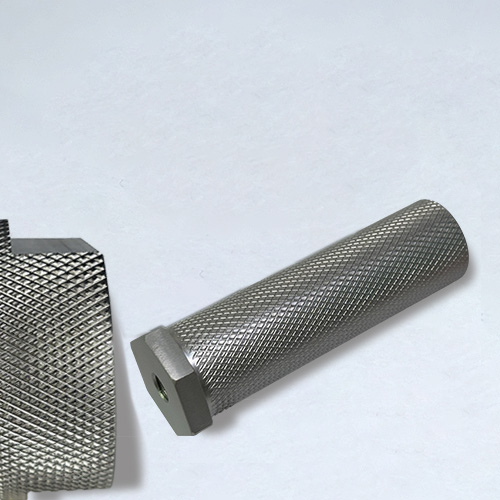
Knurling Aluminum Formexfabtech

In mechanical machining, cut knurling and pressure knurling—two common surface texturing techniques—often have noticeable price differences despite achieving similar textured effects. The core factors driving this gap lie in process characteristics, cost inputs, and application requirements, as detailed below.

1. Process Complexity and Efficiency

Pressure knurling is a chipless forming process that uses roller pressure to deform material surfaces directly. It features fast single-pass operation, simple tool path planning, and high production efficiency—ideal for high-volume runs. Lower processing time and simplified operations directly reduce labor and equipment occupancy costs.
Cut knurling, by contrast, is a chip-removing machining process. It requires sharp cutting tools to shear material gradually, often needing multiple passes for deep or precise patterns. The slower speed, combined with the need for precise parameter adjustment (e.g., cutting depth, feed rate), increases processing cycle time and labor intensity, pushing up costs.

2. Tooling Costs and Wear

Pressure knurling tools (hardened steel rollers) have high durability and low wear rates, even for high-volume production. Their simple structure leads to lower manufacturing and replacement costs.
Cut knurling tools rely on sharp cutting edges that dull quickly, especially when processing hard materials (e.g., stainless steel, alloy steel). Frequent tool sharpening or replacement not only increases tooling expenses but also interrupts production, adding indirect costs.

3. Material and Quality Requirements

Pressure knurling works best with ductile materials (e.g., aluminum, mild steel) and has relatively loose tolerance requirements. It produces no material waste and avoids additional post-processing, keeping costs down.
Cut knurling is designed for hard, brittle materials or components with tight tolerances (e.g., precision mechanical parts). It may generate burrs requiring post-cleaning or deburring, and the higher quality control standards (e.g., texture dimensional accuracy) further increase inspection and processing costs.

4. Application Scenarios and Customization

Pressure knurling is widely used in cost-sensitive, high-volume products (e.g., general knobs, fasteners), with standardized patterns reducing customization costs.
Cut knurling is favored for high-end precision applications (e.g., aerospace parts, medical devices) that demand custom patterns or strict tolerances. The need for personalized tooling and process optimization directly raises the overall price.
In summary, pressure knurling offers cost advantages through high efficiency and low tool wear, suitable for mass-produced, general-purpose components. Cut knurling commands a premium due to its precision, hard-material compatibility, and customization capabilities, targeting high-end, low-volume projects. Price differences ultimately reflect the trade-off between process performance, cost inputs, and application value.