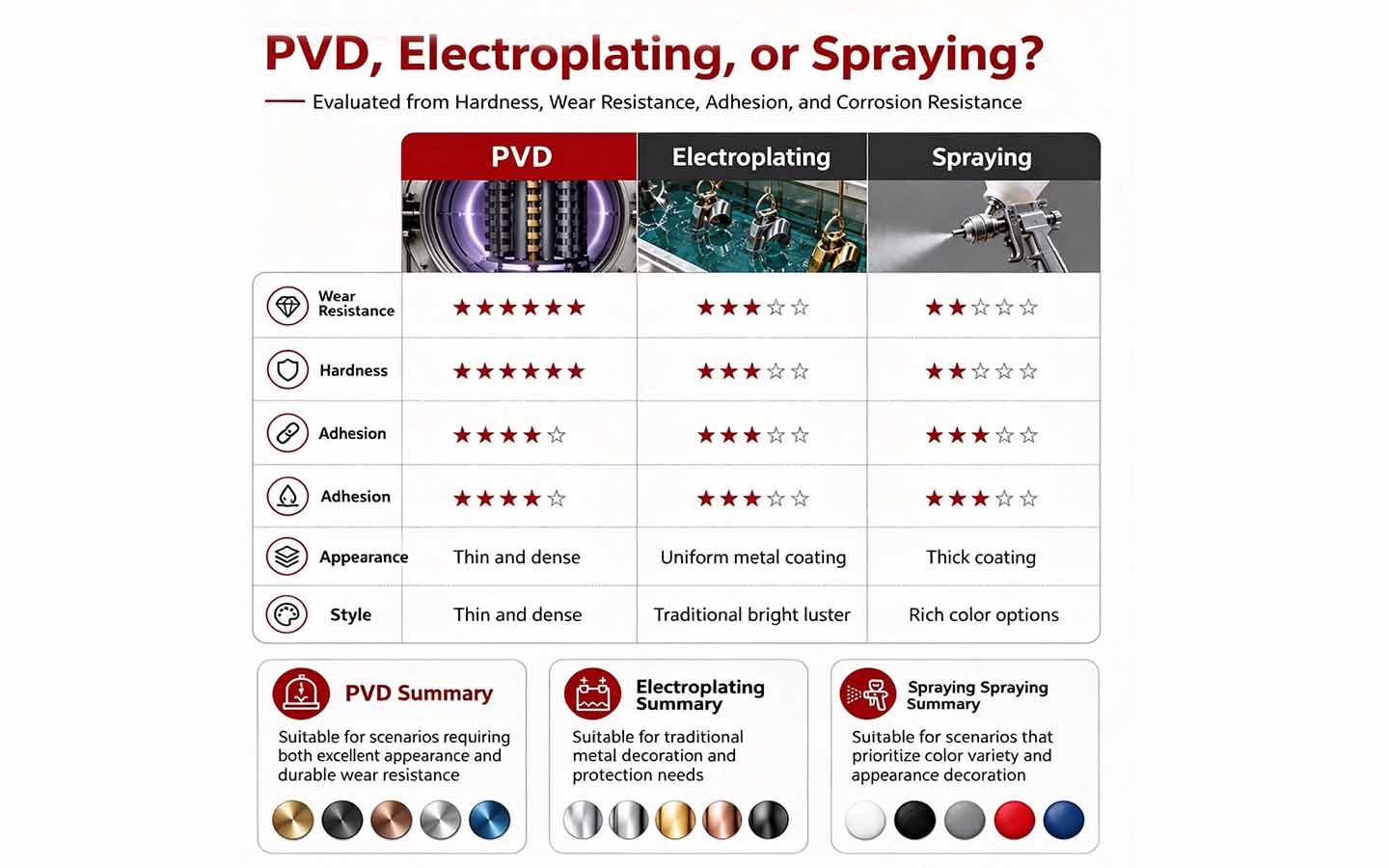
Surface Treatment Related, Machining Q&A PVD, Electroplating, Spraying – Core Comparison Posted by FORMEXFABTECH June 28, 2026 On June 28, 2026 Understand at a glance: What are the differences between PVD, Electroplating and Spraying? — Core comparison of 3 common surface treatment processes PVD One-sentence explanation: Deposit metals or compounds onto workpieces under vacuum environment. Electroplating One-sentence explanation: Precipitate a metal coating on the surface via electrochemical reaction. Spraying One-sentence explanation: Spray coating material onto substrate surface, then bake or cure to form film. PVD Electroplating Spraying Principle Film formation by physical deposition Metal deposition via electrochemistry Surface covered by coating paint Surface Texture Strong metallic texture, premium color luster High gloss, classic metallic finish Wide color range, matte/gloss optional Core Advantages High hardness, wear-resistant, dense coating Mature process, strong decorative effect Flexible cost, abundant color options Typical Drawbacks High initial equipment investment Heavy burden for environmental protection treatment Generally poor wear resistance Common Applications Hardware, cutting tools, bathroom fixtures, watches Auto parts, hardware, plastic decorative parts Home appliance housings, furniture, device casings Working Principles of PVD, Electroplating, Spraying Durability Comparison – PVD vs Electroplating vs Spraying Index PVD Electroplating Spraying Wear Resistance ★★★★★★ ★★★☆☆ ★★☆☆☆ Hardness ★★★★★★ ★★★☆☆ ★★☆☆☆ Adhesion ★★★★☆ ★★★☆☆ ★★☆☆☆ Corrosion Resistance ★★★★☆ ★★★★☆ ★★★☆☆ Coating Feature Thin & compact Uniform metal plating layer Relatively thick coating Appearance Style Premium metallic texture Traditional high-gloss luster Extensive color selection Individual Summary PVD Summary: Suitable for scenarios requiring both premium appearance and wear durability Electroplating Summary: Suitable for traditional metal decoration & protection demands Spraying Summary: Suitable for projects prioritizing color diversity & surface decoration Environmental Performance – PVD, Electroplating, Spraying Index PVD Electroplating Spraying Wastewater & Waste Liquid Minimal volume Large volume, strict treatment required Small volume VOC Emission Low Low Generally high Production Environment Fully processed inside vacuum equipment Chemical tank solution environment Spray booth & baking environment Environmental Management Challenges Equipment & energy consumption control Wastewater, tank liquid & heavy metal management Waste gas, VOC & dust control Production Traits Stable mass production, minimal post-treatment Mature process, heavy post-treatment workload Flexible process, easy color switching Process Selection Guide – PVD, Electroplating, Spraying PVD Suitable demands: High hardness, wear resistance, corrosion resistance, premium metallic finish Budget trait: High upfront equipment investment; best for mid-to-high-end products Common applications: Hardware, bathroom fittings, watches, cutting tools, functional mechanical parts Electroplating Suitable demands: Traditional metal plating, high-gloss decoration & surface protection Budget trait: Mature manufacturing process; extra cost reserved for environmental compliance Common applications: Auto parts, hardware, plastic decorative pieces, bathroom hardware Spraying Suitable demands: Rich color options, decorative finish, personalized partial coating Budget trait: Low equipment entry barrier, easy color switching Common applications: Home appliance casings, furniture, electronic enclosures, construction materials