

Blog
Why Some Rolled Parts Require Stamping Dies Instead of Roll Forming

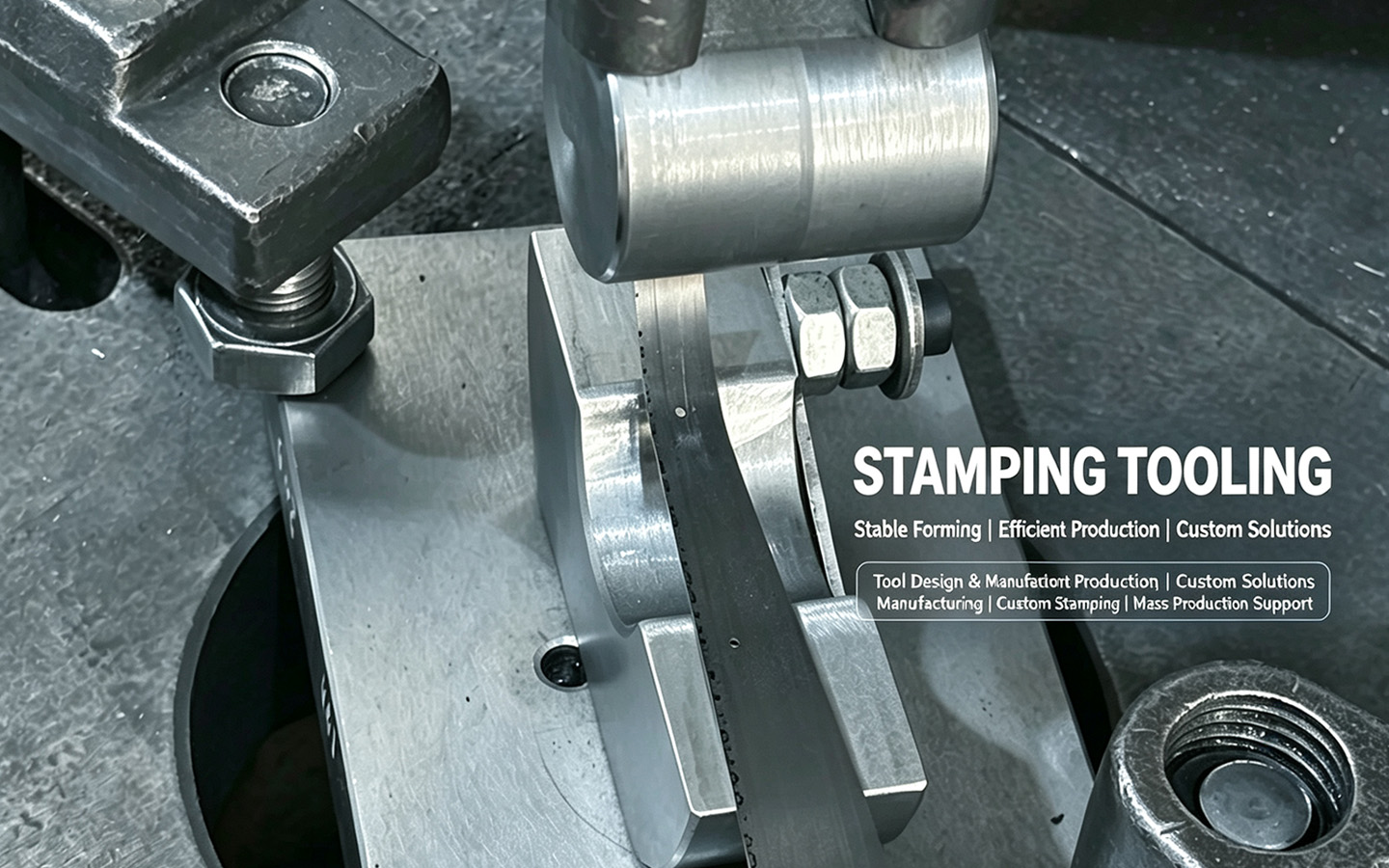
Roll forming machines (plate rollers/roll-bending machines) are commonly used to produce cylinders and curved sheet parts, but not every “rolled” shape can be made this way. For parts with complex geometry, tight tolerances or specific functional features, stamping dies (or combined die processes) are often required to ensure correct form, dimensions and repeatability. Below are the main reasons, decision criteria, and recommendations.
Local features such as bosses, recesses, ribs, steps, lugs, holes or slots interfere with or cannot be formed during simple roll bending. Rollers are suited to uniform, global bending and cannot simultaneously produce complex localized 3D features. If you need precise holes or cutouts on a curved surface, post-roll machining often causes positional shift or distortion that breaks assembly requirements.
Thicker material or areas that require local stretching/compression can wrinkle or overstretch during rolling. Stamping dies (deep draw, flanging, stretching) control material flow to avoid wrinkles and necking. For multi-layer or laminated parts that must be formed precisely, stamping/drawing offers better control.
Features like flanges, snaps, bent tabs, locating bosses or integrated connections that must be produced together require progressive or compound dies (blanking, punching, flanging, drawing) to ensure assembly fit and mechanical strength. Roll forming cannot perform these secondary operations during bending.
If the part’s visible surface must be free of roller marks or indentations (e.g., for decorative finishes or plating), rolling’s contact can damage the finish. Die forming can preserve surface quality via polished tool faces or protective liners. When weld seam location or mating faces must be exact, one-shot die forming ensures correct geometry.
For simple, uniform thin-walled cylinders, roll forming is low-cost and efficient—ideal for small to medium runs. But for complex parts produced in moderate to high volumes, the upfront cost of dies is offset by lower per-piece cost and greater process stability. For very small runs, die cost may be prohibitive; in that case consider redesigning for rollability or using limited post-processing.
Rolling can produce wrinkles at localized highs, non-uniform thickness, seam misalignment, or springback-caused dimensional failures. Dies allow tighter control of material flow, stress distribution and final shape, simplifying quality control.