

Blog
Common Challenges in Metal Bending

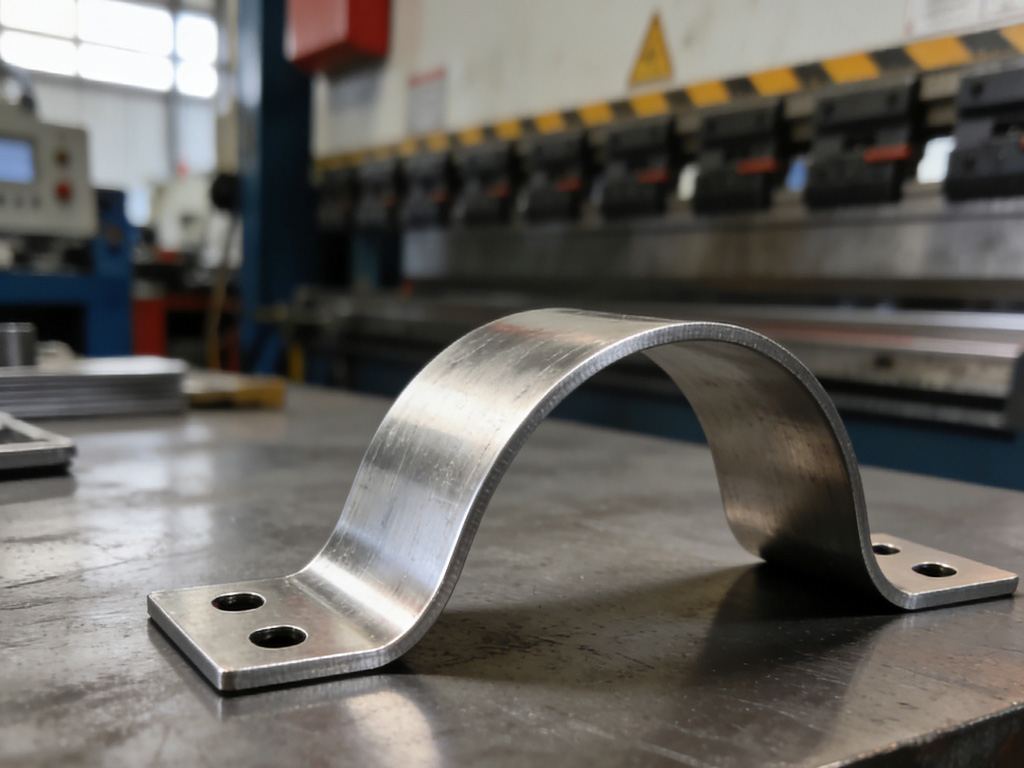
While bending sheet metal seems straightforward, some issues can arise. Fortunately, MakerVerse’s fully-vetted supply chain and in-house experts ensure the quality of your part. Sheet metal bending eliminates the need for specialized tooling, leading to shorter lead times and faster production cycles. Checking the flat pattern in CAD helps verify that designs can be produced without issues during bending. Laser cutting is often used to prepare flat patterns for bending, providing high accuracy and enabling complex shapes, which improves both efficiency and fabrication quality.
Managing material costs is a significant factor in sheet metal bending projects, as it directly impacts overall project expenses and the quality of the final product. Careful selection and optimization of materials help ensure cost-effective and high-quality fabrication.
Always account for springback by slightly over-bending.
Avoid sharp internal corners to reduce cracking risk.
Use consistent material thickness for predictable results.
Design with appropriate bend radii to prevent deformation.
Collaborate with experts for feedback on manufacture ability.
Springback: When metal is bent, it tends to bounce back a little toward its original shape once the bending pressure is released. This phenomenon is called springback. Predicting the amount of springback and adjusting the bend angle accordingly is crucial to fix this. This might involve over-bending the material slightly so that it springs back to the desired angle. Thicker materials generally require larger bend radii to prevent deformation.
Cracking: If bent too sharply, some metals, especially those that are brittle or not ductile enough, may crack at the bend. Using a larger bend radius or annealing the metal beforehand can reduce the risk. Proper material selection is also essential. Our experts are happy to help with design feedback and material selection. Parts should be designed to avoid sharp internal corners, as they increase internal stress and risk cracking.
Warping: Uneven stresses during the bending process can cause the metal to warp or deform undesirably. Ensuring even force distribution, proper tool alignment, and consistent material properties can help mitigate warping.
Surface Damage: The physical pressure during bending, especially with certain techniques, can mar the surface of the metal, leading to aesthetic and structural issues. Using films or coatings during bending, opting for less abrasive bending techniques, or post-process finishing can keep the surface pristine.
Inaccurate Angles: Achieving the desired angle is challenging, especially when dealing with variable material properties or machine inaccuracies. Regular machine calibration, using advanced tooling with angle feedback, and compensating for known material behaviors can increase accuracy.
Material Thickness Variations: Inconsistent material thickness can lead to unpredictable bending results. Quality checks of raw material and selecting high-grade sheets can ensure consistent thickness, leading to more predictable bends.
Tool Wear: Repeated bending, especially with harder metals, can lead to tool wear. Worn tools might not produce clean bends and can introduce defects. Regular maintenance, wear-resistant tooling materials, and rotating tools can prolong tool life and ensure consistent results.