Blog
Why is the quotation for the sheet metal parts you received so different?
The price difference for sheet metal bending parts essentially stems from disparities in cost transparency and service value. Low prices often correspond to "cost cutting" or "risk transfer," while high prices are associated with "quality assurance" and "value-added services." Rational choices should be made based on the specific needs of your order.
I. Raw Materials: "Hidden Gaps" in Basic Costs
- A common industry issue is the discrepancy between "nominal thickness" and "actual thickness". For example, if a customer requires 1.5mm thick iron plates, Supplier A may use "positive tolerance materials" with an actual thickness of 1.45mm, while Supplier B may use "negative tolerance materials" with an actual thickness of 1.3mm. If the quantity of parts is large, the total price difference will be drastically amplified.
Material loss rate
2.Another key factor to distinguish is that most factories specialize in specific processes—they cannot process all types of parts with their in-house machinery. As a result, the quotes you receive may not come directly from end-user factories (i.e., factories that perform the actual production).
Most factories do not have the habit of stockpiling various types of materials. If you only need a small part but the quote exceeds your budget, it may be because the part’s special thickness does not match the standard material thicknesses used by the factory’s regular customers. In such cases, the factory must purchase materials in full standard sheets (the minimum purchasable size).
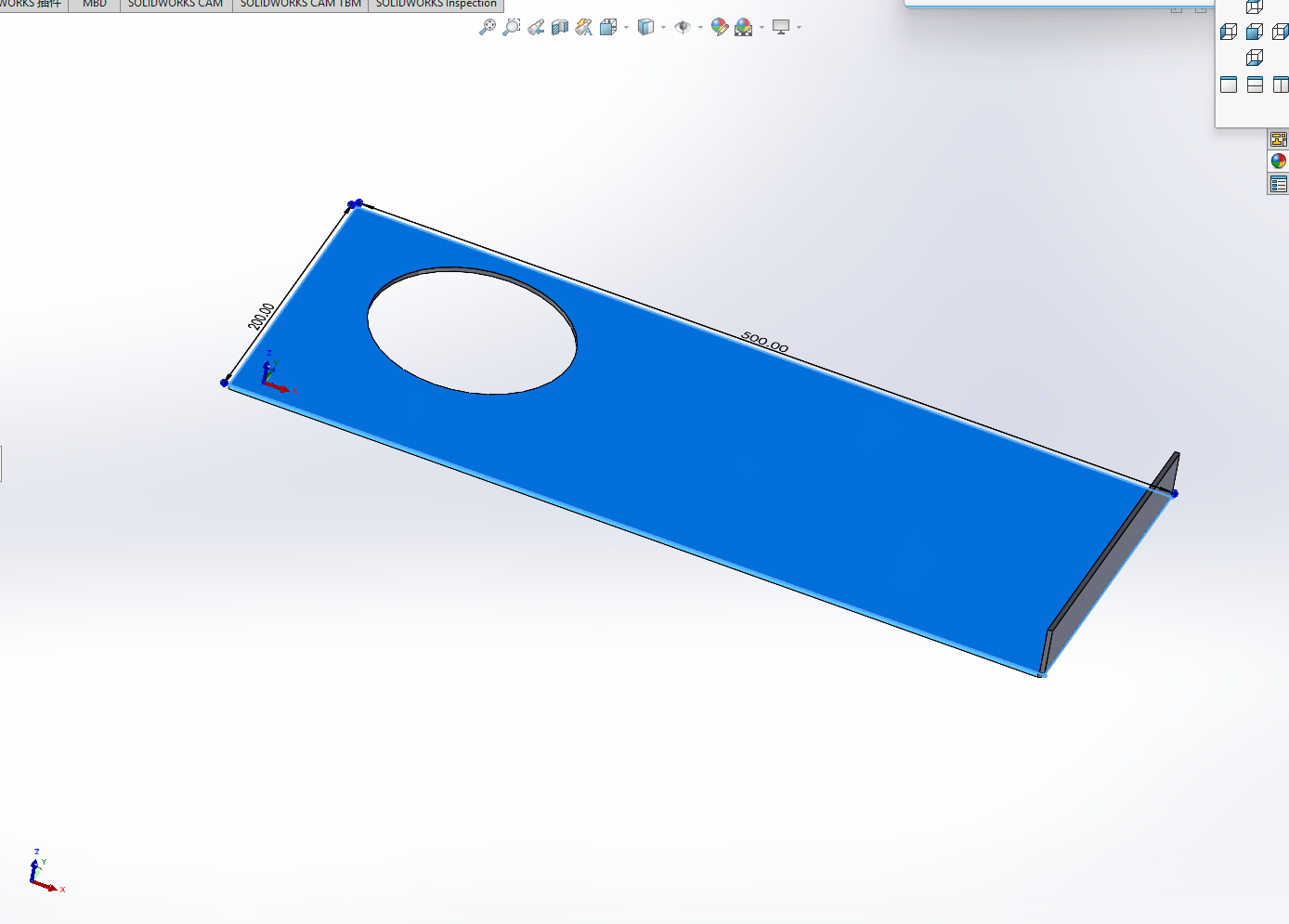
For instance, the minimum size of a full 304 stainless steel sheet available for purchase in China is approximately 1220×2440mm. Suppose you need 2 pieces of 500×200mm parts with a thickness of 1.5mm. If no other customers currently require this specific thickness, some factories will typically average the cost of the entire sheet into the unit price to avoid material waste.
- For corrosion resistance requirements (e.g., 304 stainless steel), the "nickel content" directly affects the price—compliant materials with 8% nickel content cost more than non-compliant ones with 6% nickel content.
- Surface pretreatment: If parts require rust prevention, pre-treated materials (e.g., galvanized or phosphated) cost 10%-20% more than materials processed post-bending. However, pre-treatment prevents coating damage after bending. Non-compliant suppliers often omit this step to offer low quotes and attract customers, which can lead to rust issues later.
II. Bending Process: Precision and Efficiency
- Low-end equipment (manual bending machines / standard CNC bending machines, precision ±0.5mm): Suitable for simple parts. Equipment depreciation is low (RMB 20-50 per hour), but bending angles are prone to deviations, requiring repeated manual adjustments and resulting in low efficiency (200-500 parts per day).
- High-end equipment (servo CNC bending machines + laser positioning, precision ±0.1mm): Suitable for complex multi-bend parts (e.g., polygons, closed parts). Equipment depreciation is high (RMB 100-300 per hour), but no manual adjustments are needed, ensuring high efficiency (800-1500 parts per day) and avoiding "rework costs" (rework rates for low-end equipment can reach 5%-10%, compared to only 0.5% or less for high-end equipment).
III. Batch Quantity and Lead Time: "Price Regulators" of Order Attributes
IV. Post-Processing
- Assembly and packaging: Offering "bare parts" (no additional cost) vs. "pre-assembled components" (requiring manual assembly, RMB 5-20 per unit) vs. "export-grade packaging" (moisture-proof and shock-proof, increasing packaging costs by 10%-20%). These value-added services are all reflected in the quote.
Link (Click to view our packaging)
V. Supplier Positioning: "Service Model Determines Price"
- Different types of suppliers (factories / traders / small workshops) have entirely different cost structures and profit requirements.
"When faced with vastly different quotes, do not focus solely on the "numerical value." Instead, "break down the costs" based on your own needs to make an informed decision."
Generally speaking, the pricing range is closely related to the product quality.