Blog
Surface Finishing:What is glod plating?
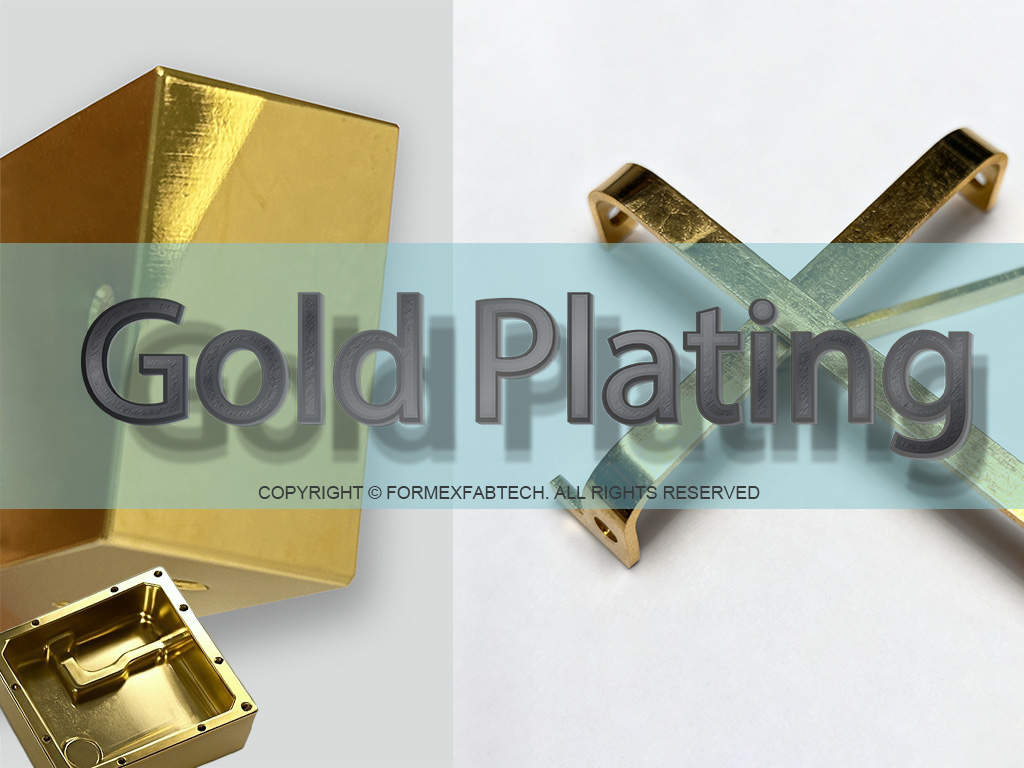
Gold plating is a surface treatment process that deposits a thin layer of gold onto the surface of metal parts or plastic parts( metallic or non-metallic substrates)
Its core functions are to enhance product decorativeness and conductivity, while providing corrosion resistance to the substrate. The plating thickness typically ranges from 0.1 to 5μm. It is mainly divided into two types based on process and application.
Gold ions are deposited onto the workpiece surface via chemical or electrochemical methods to form a uniform gold layer. Essentially, it is a "surface coating" (the substrate material remains unchanged internally; it is not solid gold throughout).
- Decorativeness: Gold’s metallic luster is premium and long-lasting, commonly used to enhance the appearance of jewelry and high-end components.
- Functionality: Gold has excellent conductivity and oxidation resistance, suitable for conductive/corrosion-resistant requirements of electronic components and precision instruments.
- Protection: Isolates the substrate from the external environment to prevent rust and oxidation.
Two Main Gold Plating Processes (Brief Comparison)
(1) Electroplating Gold
- Principle: When an electric current is applied, gold ions in the gold salt solution adhere to the substrate surface to form a plating layer. The substrate must be a conductor (e.g., copper, silver, stainless steel).
- Features: Uniform plating, strong adhesion, precisely controllable thickness, moderate cost, and wide application.
- Common Applications: Electronic connectors, jewelry, precision instrument components.
(2) Electroless Gold Plating
- Principle: No electric current required; gold ions deposit automatically on the substrate surface through chemical reagent reactions. Suitable for both conductors and non-conductors (e.g., plastic, ceramic).
- Features: Simple process, can cover complex irregular parts, thin and uniform plating.
- Common Applications: Plastic jewelry, decorative parts on non-metallic substrates, small electronic components.
3. Key Supplementary Notes (Avoid Confusion)
- Difference from Gold Filled: Gold filled plating thickness is >10μm (much thicker than gold plating), with higher cost and better durability.
- Practicality: Ordinary gold plating suffices for daily decoration/basic functions; thick gold plating or gold filled is optional for high wear resistance requirements.
- Substrate Compatibility: Metallic substrates can be gold-plated directly; non-metallic substrates require prior conductive treatment before electroless gold plating.
FORMEXFABTECH primarily offers processing services for various product designs.Looking for a reliable partner, please feel free to contact us.